


Key Takeaways:
- A healthy cat poo is brown in colour and smooth in consistency.
- Commonly, most cats poo once or twice a day.
- If your cat has constipation or diarrhoea for more than two days, or seems unwell, you should take them to a vet.
Yes, we’re really going there. It’s not very glamorous, but paying close attention to what’s in your cat’s litter box will give you lots of clues about their health.
Problems like diarrhoea and constipation, or changes in the colour, consistency and frequency of your cat’s pooing habits can be one of the first signs that they’re poorly.
As much as you might like them to, your cat can’t tell you when something’s wrong. So what you pick up in your pooper scooper is their way of sending you a warning signal (it’s almost as nice as the other ‘presents’ they leave by the back door). Plus, if you do take your cat to a vet, poo questions might be some of the first they ask you.
Here’s everything you need to know about your cat’s business.
What does a healthy cat poop look like?
A healthy cat poo should look like a well-cooked sausage.
It’ll be chocolate brown in colour and have a torpedo-like shape. The texture will be firm and uniform, with no stand-out lumps, and there’ll be little to no slime or jelly around the poo (mucous).
A weaned kitten’s poo will look the same, just a little smaller. If they’ve not been weaned, it might have a bright mustard yellow colour.
Each cat’s poo might have a slightly different appearance, so it’s important to know what your cat’s healthy stools look like. Then you’ll easily and quickly spot any changes.
Signs of an unhealthy cat poop
The main signs you need to pay attention to are a cat poo’s colour and consistency.
If you spot changes that don’t go away within one or two days, it could suggest that your feline friend isn’t as healthy as they could be, and you should get them to the vet.
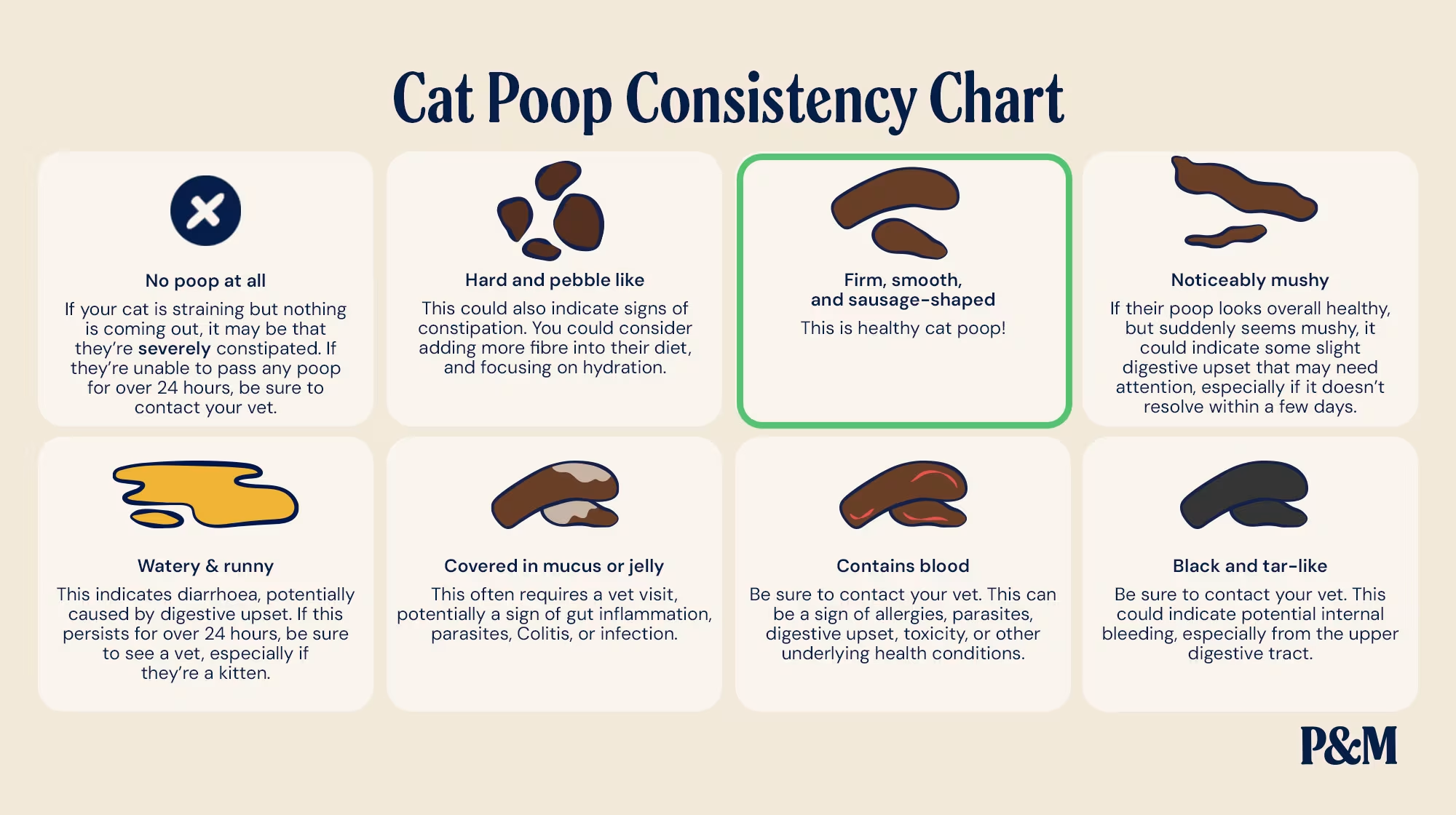
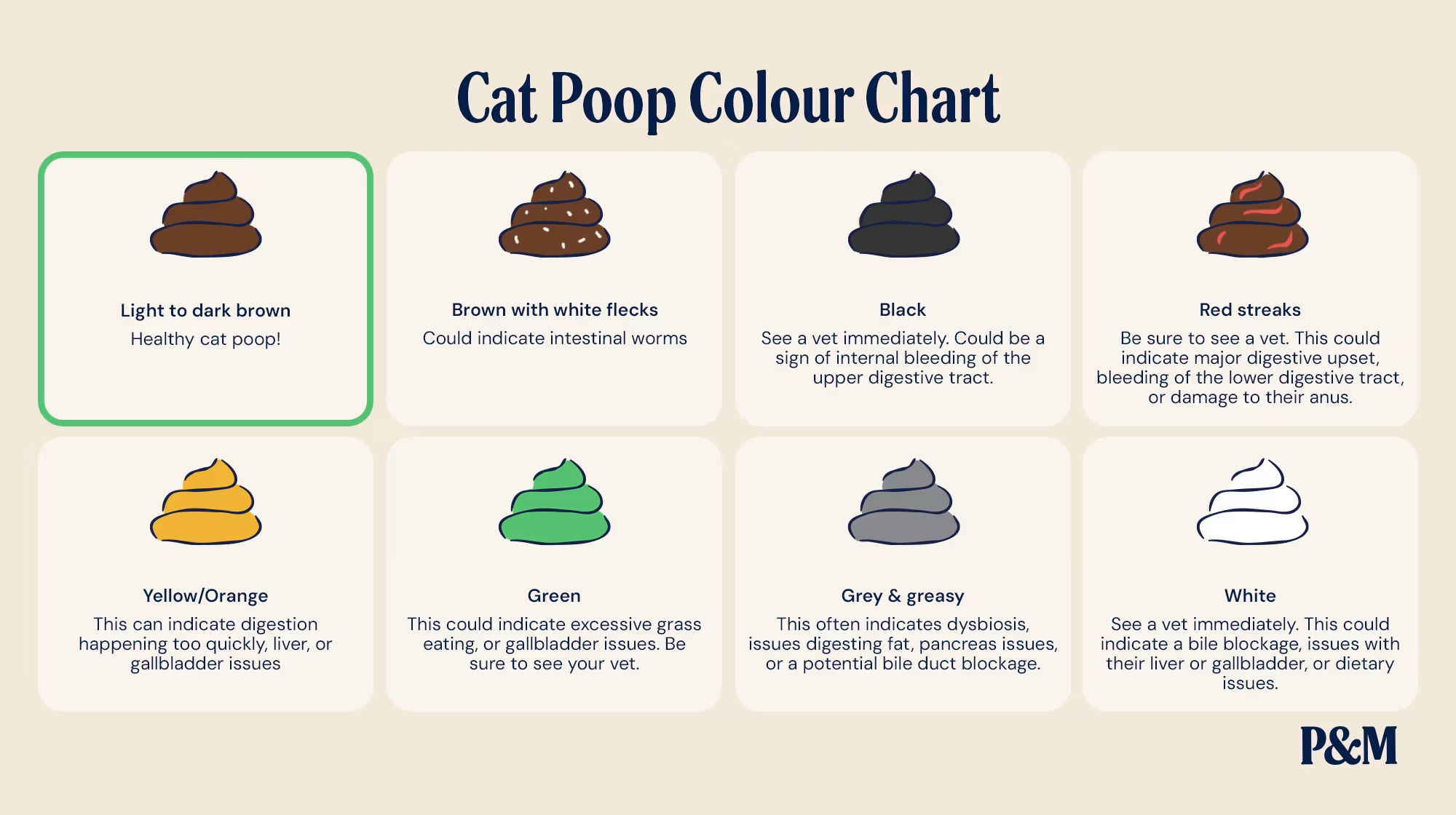
It’s also important to pay close attention to any foreign objects you see in a stool. For example, if you see spaghetti-like worms, this is likely to be a sign of parasites.
Similarly, you should keep an eye out for hair, pieces of undigested food or something more unusual (like a ribbon, a cord or other material).
If you look at their poo and think they might have parasites or eaten something they shouldn’t have, then take them to a vet for a check-up.
Why does my cat’s poo smell so bad?
Cat poos are pungent and can be a shock to new owners (it’s not like roses, after all). This is because there’s a sulfur-based compound in their poo which creates a strong smell similar to rotten eggs. That said, if the smell changes or gets stronger, it’s worth getting checked by a vet to see if there’s a problem.
Certain medical issues can also be at play when poo is extra pungent. Giardia infections are notorious for causing very smelly stools, weight loss and flatulence.
How often should cats poop a day?
Most healthy cats will poo once or twice a day.
Outdoor cats usually poo more often because they’re more active and eat prey. It’s important to note that each cat is different, with some pooing up to three times a day or only every other day.
Kittens tend to poo more, while senior cats will poo less.
Factors other than age and lifestyle can also have an impact on how often a cat poos, such as:
Their diet, including whether they eat wet or dry food. Cats that eat wet food tend to poo smaller stools more often because of its high water content. Those that prefer dry food tend to have bigger poos less frequently as it has less moisture and more fibre
Stress can have a big impact on a cat’s poo. The hormones released as they worry can cause them to have loose stools or diarrhoea. Alternatively, they could hold on to their poo, which leads to constipation
Access to a suitable toilet. Whether they use a litter box or not, if cats can’t find somewhere comfortable to poo, then they won’t. Creating an area of loose soil in a quiet, sheltered part of your garden can encourage your outdoor cat to poo (away from your flower beds). For indoor cats, choosing the right box, litter and location is key
How long can a cat go without pooing?
A cat shouldn’t go much longer than a couple of days without having a poo.
If your puss hasn’t pooed for more than three or four days, they should get taken to the vet. Similarly, take them in at any point if they are off their food, lethargic, straining, vomiting or bloated.
If a kitten or senior cat hasn’t pooed in more than a day, keep an extra close eye on their appetite and behaviour, and consider getting them checked with your vet.
Common poo problems in cats
Just like humans, cats can get constipated or have runny poos every so often. If your cat has one of these problems for more than a day, then you should get some advice from a vet.
Constipation in cats
If your cat has constipation, they might not be able to poo at all, or their stools will be hard and dry.
They might also strain when they try to poo or are unable to pass a stool in their litter box. Pain around their tummy (which causes them to yowl), tiredness and a loss of appetite are also signs that they’re struggling.
Vet Linda warns, be aware that a urinary obstruction is often confused for constipation by owners. If your cat is straining in their tray and seems uncomfortable, make sure they can pass urine. A cat who is doing this and not urinating is a true medical emergency.
Why isn't my cat pooping?
There are lots of reasons why a cat might not be able to poo, including:
Dehydration, because they’re not drinking and don’t have enough moisture in their diet
A lack of movement, which helps to stimulate a cat’s digestive system and keep the poo moving
Stress (including anxiety over their litter box) which causes them to hold onto their poo
To stimulate your cat to poo, give them plenty of water and some wet food, keep them calm and encourage them to move. This should get things moving. If it doesn’t and your kitten doesn’t poo after a day, or a cat after two days, then you should take them to a vet.
Diarrhoea in cats
Cats have diarrhoea when their stools are watery or too soft. It might also mean they visit the litter box more often.
Usually, it’s a sign of a short-term infection or illness and will improve in 24 hours, especially if you keep them relaxed and add some fibre into their diet. But if stools are loose for more than a day, you should take them to the vet, as it could be a sign of:
An infectious disease
Worms or other parasites
Inflammatory bowel disease
A new food allergy
Toxins or foreign objects in their digestive system
An endocrine disorder such as hyperthyroidism
Liver or kidney disease
To read more about diarrhoea in cats, explore ‘Diarrhoea in Cats: Causes, nutrition, and when to see a vet’.
What to feed your cat for perfect poos
To give your cat the best possible gut health and help them pass perfect poos, their diet should include plenty of water (through drinking and wet food), digestible animal proteins and plenty of fibre.
Moisture helps keep poos moving smoothly along the digestive system. To help keep cats hydrated, make sure they always have a full water bowl and consider giving them wet food once or twice a day.
Digestible animal proteins should be at the base of every cat’s diet. They are natural carnivores, so they need lots of good quality proteins to stay healthy. Opting for meat-based, grain free foods will help keep their guts happy and settled.
Similarly, having plenty of fibre in a cat’s diet will help their stools come out full, smooth and a good consistency. Just be careful though, as too much fibre could lead to lots of runny poos. Choosing foods with vegetables in them will help keep a cat’s gut balanced.
You might also want to add extra probiotics or prebiotics to your cat’s diet to give their gut microbiome a boost. Supplements and some complete foods contain these ingredients, which support a cat’s overall wellness and energy, as well as helping them have perfect poos.
Vet-Approved Cat Food
Our grain-free, junk-free dry food for cats is specially formulated to support overall health, wellbeing, and vitality. With no added sugar, all recipes are packed with high-quality protein, natural superfoods, and prebiotics for gold star gut health, ensuring optimal nutrition for your kitty, and peace of mind for you.
-

 from
fromCurrent price: £19.49
Primal Salmon & Herring Dry Cat Food -

 from
fromCurrent price: £19.49
Primal Duck & Turkey Dry Cat Food -

 from
fromCurrent price: £11.99
Dry Superfood For Indoor Cats -

 from
fromCurrent price: £11.99
Dry Superfood For Adult Cats -

 from
fromCurrent price: £11.99
Dry Superfood For Senior Cats -

 from
fromCurrent price: £11.99
Dry Superfood For Kittens -

 from
fromCurrent price: £1.99
Primal Salmon Wet Cat Food -

 from
fromCurrent price: £1.99
Primal Turkey Wet Cat Food -

 from
fromCurrent price: £2.99
Primal Sprat & Salmon Fish Jerky For Cats -

 from
fromCurrent price: £1.49
Wet Superfood For Adult Cats -

 from
fromCurrent price: £1.49
Wet Superfood For Senior Cats -

 from
fromCurrent price: £1.49
Wet Superfood Indoor Cats -

 from
fromCurrent price: £1.49
Wet Superfood For Kittens
FAQs
Why does my cat only poop once a week?
Your cat should poo at least every day. If they’re an indoor cat and you haven’t seen them poo for more than a few days, you should take them to the vet for a check up. It can be more difficult to spot an outdoor cat pooing, but if they show signs of constipation (like straining or bloating), they should get checked out.
What does stress poop look like in cats?
Stress can either stop a cat from pooing or cause diarrhoea. If you think stress is the cause of the problem, then you should make their environment as relaxed as possible and encourage them to do activities they like, while keeping a consistent routine.
What colour is a cat's poo with pancreatitis?
If your cat has pancreatitis, their poo might be yellowish or grey and may be greasy or fatty in consistency. If you do notice this in your cat's poop, be sure to get them checked out with your vet.
What are the signs of worms in cat poo?
If your cat has worms, you might spot them in their poo or around their bottom. They might look like cut-up bits of spaghetti in the stool, or grains of rice stuck to the fur. Their poos might also be softer than usual, with blood or mucous on the surface. A swollen belly, unexplained weight loss, scooting or licking around the tail can also be signs of parasites.
This post was originally published in July 2026, but has been updated for comprehensiveness.


