


Key Takeaways:
- Dogs have excellent eyesight, but see a limited colour spectrum compared to us, as their eyes are built differently.
- As they have dichromatic vision, dogs can see yellows and blues, but lack perception of reds and greens.
- Though they see fewer colours, dogs’ eyes see more clearly than ours in low-light conditions, and they’re quick to spot small movements at long distances.
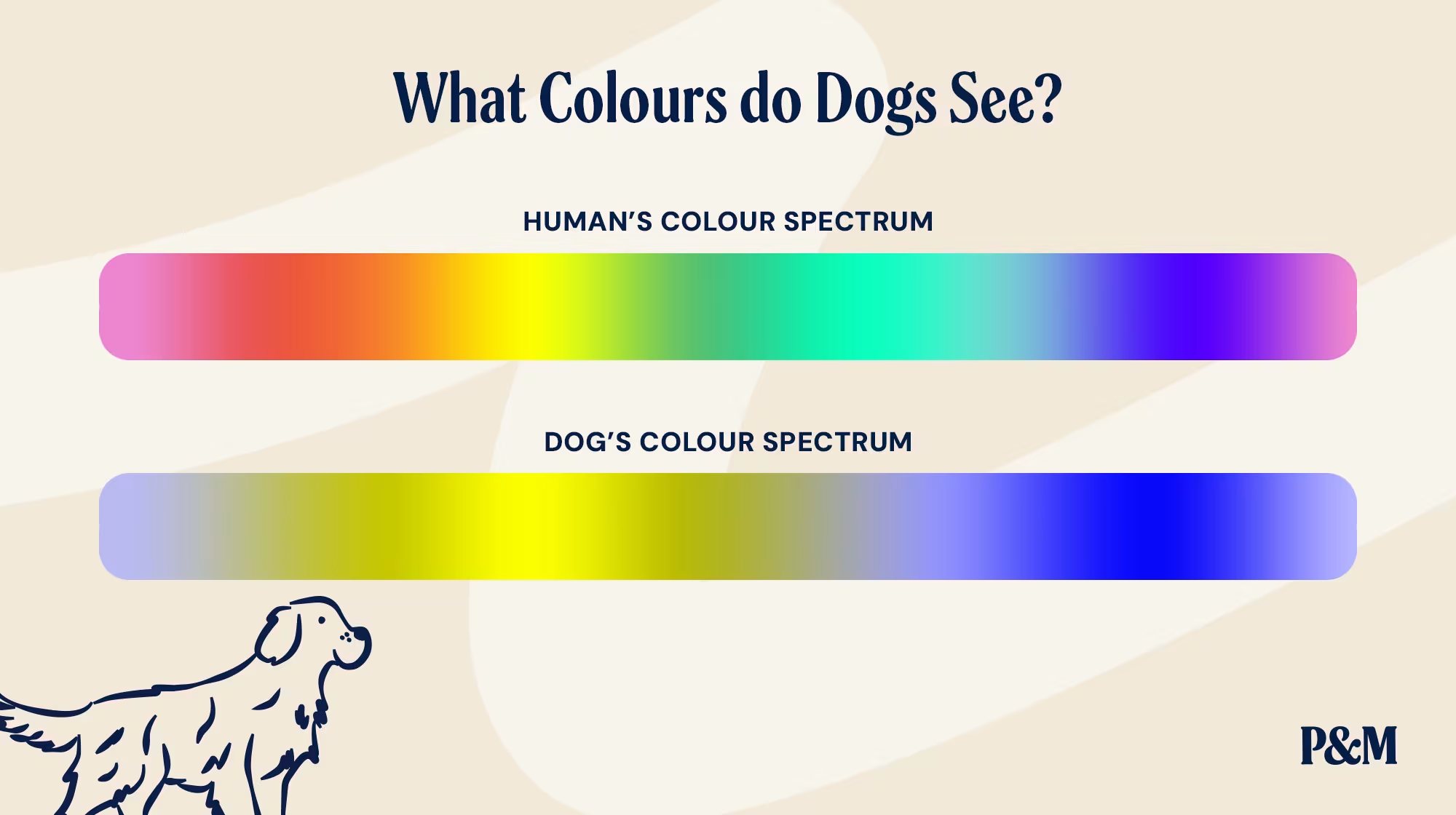
While humans see a rainbow of colours ranging from red to violet, dogs see mostly in yellows and blues, with the rest in brown and grey.
Their eyes are biologically different to ours in interesting ways, meaning they see a narrower spectrum of colours than we do.
But, as you’ll know if you have a dog yourself, this doesn’t mean their perception of the world is hindered. Their ability to spot movement at distance and see in low-light conditions is hugely impressive compared to what we can see!
In this article, we get more in-depth about what colours dogs can see, the science behind how dogs’ eyes differ from ours, and what you can do to improve your dog’s vision and eye health.
Are dogs colour blind?
Dogs are considered colour blind in a certain sense. Just like a colour blind person, their eyes aren’t built to detect reds and greens. Scientific studies into a dog’s vision have so far shown that the only colours dogs can see are yellows and blues, while everything else fades into brown or grey.
Do dogs see in black and white?
No - a peer-reviewed study back in 1989 (1) disproved the myth that dogs only see in black and white, and found that they also see some colour, mostly yellows and blues.
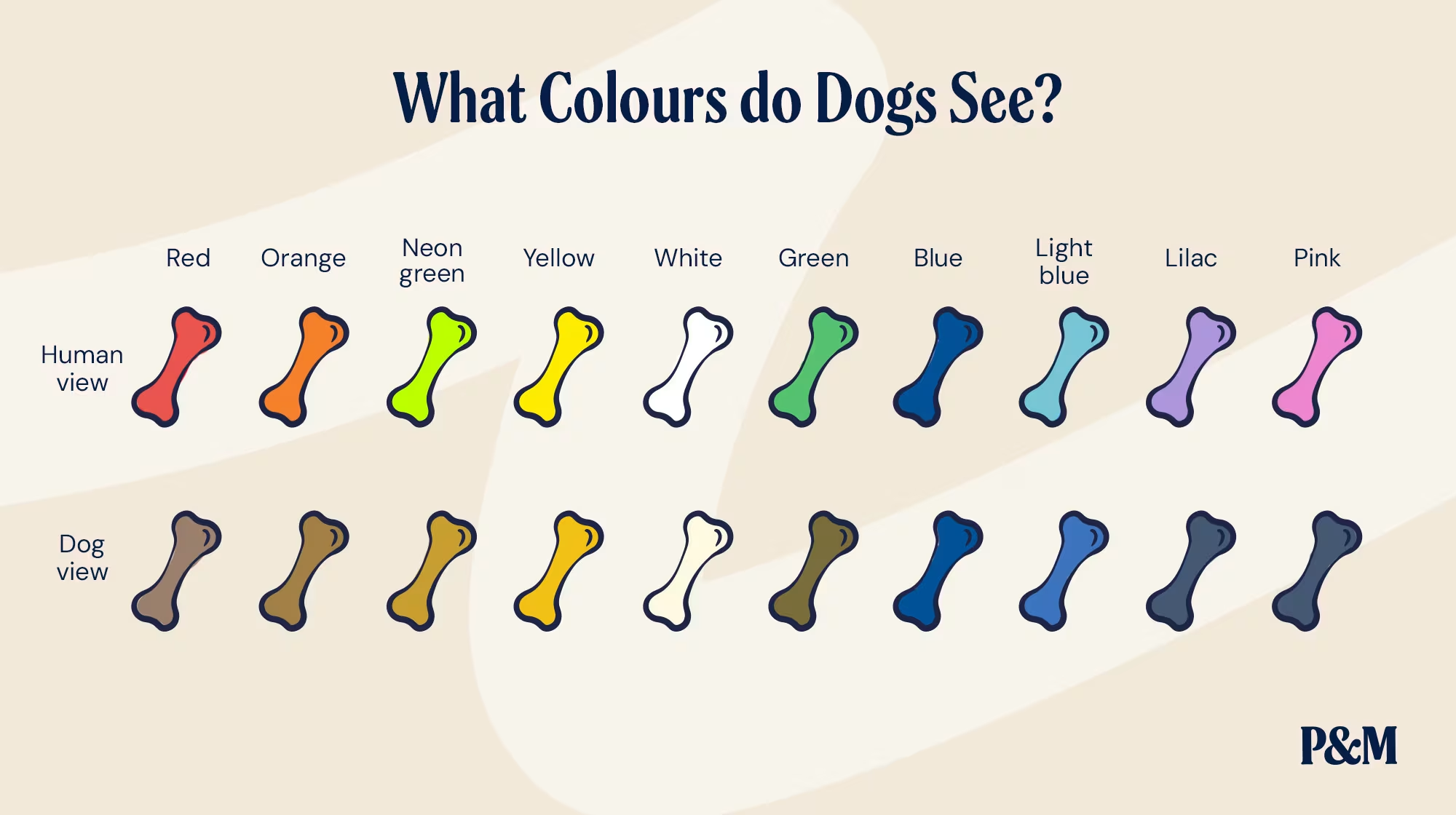
Many colours that we can see, however - such as reds, oranges, purples, and greens - appear as shades of grey or brown to a dog (which is likely how the black and white myth came about).
How the dog's eye works differently from humans
If we unpack the science, a dog’s eye is built differently from a human eye…
The human eye contains three types of colour-detecting cone cells, which collectively perceive our full colour spectrum: red to violet, and all the rainbow colours in between. This is called trichromatic vision.
Meanwhile, dogs see with two types of colour-detecting cones, called dichromatic vision. This means they lack perception of red and green, and associated colours like orange, pink and purple.
However, dogs have more rod cells than humans, and a mirrored layer over the eyeball called the tapetum lucidum. These differences make them super skilled at detecting movement in low light compared to us.
Can dogs see as well as humans?
They may see fewer colours than us, but dogs still have an excellent scope of the world around them, for these reasons…
Their detection of movement is much sharper than a human’s.
They have better vision in low light than we do, meaning they can spot predators, threats, or intruders in the dark, and get around at night relatively easily.
Dogs don’t see as fine a detail as we do, but recent studies have shown that they do have higher visual acuity, or sharpness, than initially thought (2).
Sighthounds (the clue’s in the name!) are known for having a heightened perception of long-distance movement - breeds like Greyhounds, Whippets and Afghan Hounds.
Their sense of smell can be up to 100,000 times stronger than ours, depending on breed (take a bow, Bloodhounds and Beagles); so what they can’t quite see, they can easily sniff out instead.
What colours do dogs see best?
Let’s get into more detail on the colours dogs can and can’t see…
Can dogs see red?
No - dogs’ eyes don’t detect reds and greens, much like a colour blind human. Reds are likely to show up as brown, muddy yellow or grey to a dog’s vision, without the bright ‘pop’ of colour that we’re used to seeing.
Can dogs see green?
No - dogs can’t see greens. Their dichromatic vision means they lack perception of reds and greens, and shades of green will show to a dog as murky browns or greys. This is why they might not be able to find their tennis ball straight away!
Can dogs see orange?
No - orange isn’t a colour dogs can perceive that well. Their eyes are attuned to yellows and blues, so oranges will show up to a dog as a muted gold or tan colour.
Can dogs see blue?
Yes, blue is one of the main colours in a dog’s world. Their eyes lack perception of reds and greens, but see blues and yellows. For this reason, you might notice your dog pays strong attention to a bright blue or yellow dog toy, or finds it easier to fetch (compared to toys that are red, orange or pink). This is why our Pooch & Mutt tennis ball is blue, not green!
Can dogs see yellow?
Yes, dogs can see yellow. It’s one of the colours they can see clearly, alongside blue. A neon yellow tennis ball will show up clearly to them if you play fetch, whereas a red ball might be harder for them to see.
Can dogs see pink?
No, a dog’s eye can’t see shades of pink, orange or red very easily - as they have dichromatic vision which lacks perception of reds and greens. Pink might look like a muted gold, brown, grey or tan shade to a dog.
Can dogs see purple?
No - a purple object will likely seem blue to a dog. Their eyes can see yellows and blues, so the reddish tones that make an object look purple are unlikely to come through.

Can dogs see in the dark?
They may not be as night-sighted as a cat or an owl, but it’s true that dogs can see better in low light conditions than humans can.
Do dogs have better night vision than humans?
Yes, dogs can see in the dark a few levels more clearly than humans.
Though their perception of colours is limited due to having only two cone cells, they do have more rod cells than humans, which detect movement in lower-light conditions.
There’s also an extra layer in their eye called the tapetum lucidum, which is almost like a mirror that bounces light off their eye twice when they see something.
In simplistic terms, this means they get double the chance to detect night-time movement (3). You can even see the tapetum lucidum yourself when your dog’s eyes ‘glow’ in the dark.
Keeping your dog's eyes healthy
A dog’s eyes are only as powerful as their overall health, so what are the best foods to keep your dog’s eyes and vision top-notch? Let’s get into the nutrients that can support great eye health in dog.
What food helps support dog eye health?
Omega-3 fatty acids are great for the eyes, contributing to retinal function, reducing dry eye, and may even slow age-related degeneration. Omega-3s are found in oily fish such as Salmon, Mackerel, Sardines, or Salmon Oil for Dogs.
Cooked eggs contain vitamin A and zinc, known to support eye health. Vitamin A is essential for producing rhodopsin, the pigment in the eye that improves low-light vision, and also helps maintain the health of the cornea and the surface tissues of the eye. Zinc supports the retina directly and helps with the absorption of vitamin A.
Small amounts of Liver, Beef, or Lamb also contain vitamin A and zinc.
Leafy greens like Spinach and Kale contain lutein and zeaxanthin, two antioxidants that concentrate in the retina and protect against retinal damage.
Carrots and Sweet Potatoes are full of beta-carotene, which helps a dog’s body absorb vitamin A, the superpower eye nutrient.
Blueberries, packed with antioxidants and vitamin C to support blood vessel health in the eyes and prevent retinal damage.


FAQs
How do we know what colours dogs can see?
There’s no way for us to see exactly what a dog can see, but there’s some impressive scientific research that goes into what vision is like for dogs and other animals.
A dog’s colour perception is mostly studied with a mixture of:
Behavioural choice tests, to determine whether dogs can discriminate between differently coloured objects
Electroretinography (ERG), which studies how a dog’s retina responds to certain light stimuli
Brain imaging scans, which monitor which parts of a dog’s brain ‘light up’ when shown different colours, textures and patterns.
Which colours do dogs see best?
Dogs mostly see a range of yellows and blues, which seem bright and obvious to them. This is because dogs’ eyes have two colour-receptive cone cells, known as dichromatic vision, which picks up a limited range of colours.
Without the third cone cell that humans have (trichromatic vision), dogs’ eyes don’t pick up on reds and greens. These shades tend to show to dogs as tan, browns or greys.
What is the hardest colour for a dog to see?
Reds and greens don’t appear for a dog, making it hard for them to pick out a red ball in grass, or an orange toy in autumn leaves, for instance. In a dog’s view, reds and greens blend into similar, muted shades.
What colour do dogs avoid?
Dogs don’t necessarily avoid a specific colour, but they are often more drawn to bright blues or yellows. This is because these shades are most visible to them, and they can pick out objects of these colours in contrasting surroundings.
References:
‘Color vision in the dog’, 1989 - Vis Neurosci, Pub Med.
‘High visual acuity in dogs’, 2017 - PLOS ONE 12, no. 12.
‘Spatial relationships among the cellular tapetum, visual streak and rod density in dogs’, 2015 - Journal of Veterinary Medical Science, Volume 77, Issue 2.


